Scroll for five minutes and you'll see it: matching outfits for four kids, a seven-seater SUV, a holiday villa for the whole crew. As childcare, school fees and housing get pricier, a big family has quietly become a status symbol. In some circles, three kids says "we've made it" the way a designer bag once did.
Whether you want zero kids or five, that choice is yours. But it deserves the same clear-eyed planning as any other big life decision. So let's talk about the numbers behind the photos.
What each extra child really costs
- Space: more bedrooms, a bigger car, bigger grocery runs. Housing is usually the biggest jump.
- Childcare and school: fees are often charged per child, and they add up fast when ages overlap.
- Time: someone has to do the pickups. Many women scale back paid work, which affects not just today's income but future promotions and retirement savings.
- The long tail: tuition, weddings, first cars. Costs don't stop at 18.
Some costs do get cheaper with each child, like hand-me-downs, a stroller that's already paid for and parents who've learned what they don't need. But the big-ticket items usually scale.
The flex that actually matters
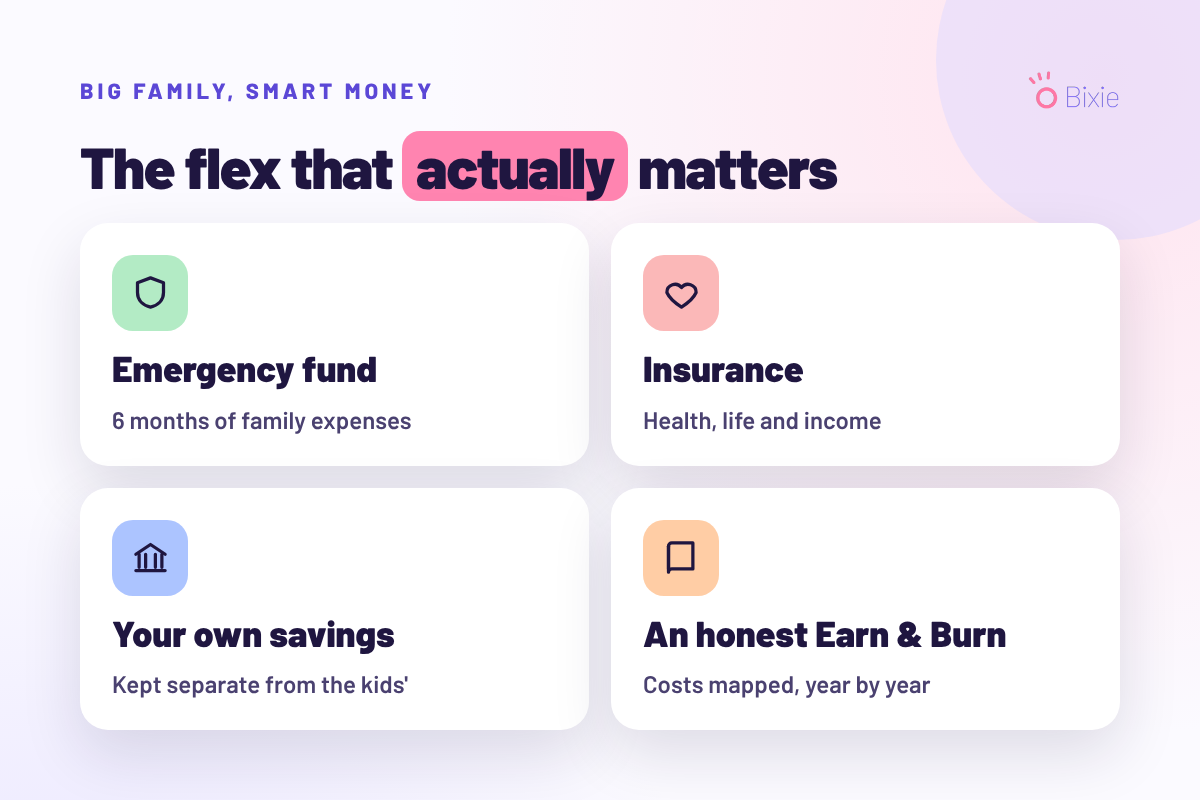
The real flex isn't the number of kids. It's being able to raise them without money stress. That looks like:
- An emergency fund that covers 6 months of your family's expenses.
- Insurance for health, life and income, so one bad event doesn't undo everything.
- Your own savings, kept separate. Your retirement can't be paid for with a student loan.
- An honest Earn & Burn that maps what each child will cost, year by year.
Try this
Ask Bixie AI to sketch a "family budget" for one, two and three kids based on your real income and costs. Seeing it side by side turns a feeling into a plan.
Big family, small family or no family: the best flex is choosing it on purpose, with your eyes and your spreadsheet open.